
- When a child presents with oral hyposensitivity, a frontal lisp, tongue thrust, and open-mouth posture, the clinical picture likely points to an orofacial myofunctional disorder (OMD) — not just an articulation issue
- A comprehensive assessment of the 4 MYODomains (airway, feeding, structure, and speech) is essential before beginning treatment — speech will not improve without investigating the first three domains
- A tongue thrust is a symptom, not the problem — it is usually caused by structural or airway issues, and associated articulation errors are downstream effects
- Oral hyposensitivity should be addressed using a whole-body, outside-in approach, ideally in collaboration with an occupational therapist. Tools like the Toothie, Sensi, and Jiggler can provide targeted oral sensory input
- Treatment success depends on consistency, small trials, and positive reinforcement — building the child's tolerance and sensory awareness gradually over time
- Courses like MYOTools 101 and Solutions to the Pesky Lisp provide clinicians with the deeper knowledge needed to effectively treat these complex, multi-domain presentations
Reader Question
From the Community
“Hello, I am a speech pathologist working with children, and I have attended some of the TalkTools workshops in recent years. I currently have a 7;6-year-old child who came to me because his parents are concerned with him not producing the /sh/ sound (he is producing /s/ sound instead). He has a significant frontal lisp, a tongue thrust, and most of the time an open-mouth posture at rest.
I have checked his sensory responses with a Toothie and he enjoyed the vibration so much and had no gag response on his tongue or on his palate. I also checked his chewing and he doesn’t have rotary chewing and sometimes stuffs food. His jaw is very unstable while speaking. I suspect a tongue tie, but I could not see a tied frenulum, so maybe it is a posterior tongue tie. My question is how to target his oral hyposensitivity for the purpose of his speech production and his resting position. His parents are mainly interested in his speech, so currently I will not work on his chewing. Thank you very much!”
Why This Case Points to an OMD
Answered by Robyn Merkel-Walsh, MA, CCC-SLP, COM®️
Expert Response
The child described seems to present with an orofacial myofunctional disorder (OMD). When an OMD is present, we need a full assessment of the 4 MYODomains:
- 1. Airway
- 2. Feeding
- 3. Structure
- 4. Speech
Speech will not improve without first looking at and treating the first three domains. This is a key point: a tongue thrust is a symptom, not the problem. Specifically, it is usually caused by structural or airway issues. Therefore, the articulation error (/sh/ → /s/ substitution and the frontal lisp) is a side effect of these underlying factors — not a standalone issue to treat on its own.
How Oral Hyposensitivity Affects Speech Production and Open-Mouth Posture
Oral hyposensitivity — reduced sensation in the mouth — can have wide-reaching effects on both speech and resting posture. When a child has low sensory awareness in the oral cavity, they may struggle to:
- Position the tongue correctly for speech sounds
- Keep the lips closed at rest
- Coordinate jaw movements needed for clear speech
- Develop the rotary chewing pattern needed for safe, efficient feeding
The Link Between Low Sensation and Open-Mouth Posture
As a result, the open-mouth posture this clinician describes is a key warning sign. In fact, children with oral hyposensitivity often lack the sensory feedback needed to signal the brain to keep the mouth closed. This, in turn, can lead to mouth breathing and its related complications.
A Whole-Body, Outside-In Approach to Oral Sensory Processing
First and foremost, Robyn recommends working with an occupational therapist (OT) to take a whole-body approach to oral desensitization. Specifically, this approach starts from the outside in — addressing the broader sensory system before focusing on oral-specific work.
Oral Placement Therapy Tools for Targeting Hyposensitivity
Several TalkTools® oral placement therapy tools can help address oral hyposensitivity:

Provides vibration and textured input for increasing or decreasing oral sensitivity prior to feeding, oral exercise, or speech sound production work.
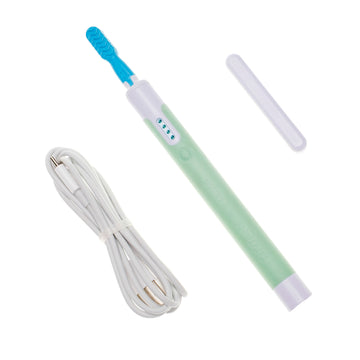
Offers varied sensory input through interchangeable tips for targeted oral stimulation.
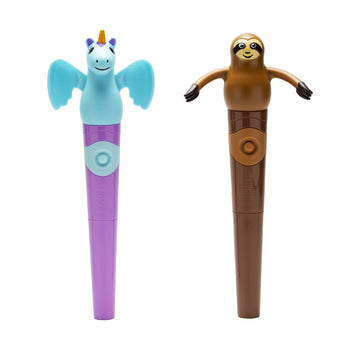
Provides vibration-based oral-motor input to improve sensory awareness in and around the mouth.
When using these tools, three core principles guide the work. First, consistency matters — regular, repeated sensory trials build familiarity over time. Second, small trials keep sessions brief so the child can build tolerance step by step. Finally, positive reinforcers help the child connect oral-motor work with good experiences, which boosts engagement and follow-through.
Recommended Resources for Sensory-Motor Feeding
🎓 Recommended Resource
A Sensory-Motor Approach to Feeding (Book)
Co-authored by Robyn Merkel-Walsh and Lori Overland, this book covers sensory processing and oral-motor skill development for safe, effective feeding. Indeed, it is an essential reference for clinicians working with oral hyposensitivity and feeding disorders.
Get the book →🎓 Related Course
Navigating the Feeding Journey: Feeding Therapy — A Sensory-Motor Approach
This course by Lori Overland, MS, CCC-SLP covers the sensory-motor factors behind feeding disorders. Specifically, it is ideal for clinicians working with children who have oral hyposensitivity, reduced chewing skills, or sensory-based feeding challenges. 1.2 ASHA CEUs | 1.2 AOTA CEUs.
Learn more →Why You Can’t Skip the First Three MYODomains
It can be tempting to focus directly on speech when that is the family's main concern. However, as Robyn emphasizes, speech outcomes depend on what is happening in the airway, feeding, and structural domains. In other words, a child who shows oral hyposensitivity, jaw instability, absent rotary chewing, and open-mouth posture needs a full orofacial myofunctional evaluation — not just an articulation assessment.
Even so, a possible posterior tongue tie should also be explored. In fact, this structural factor alone can drive many of the symptoms described, including the frontal lisp and tongue thrust.
Even though this child's parents are mainly focused on speech, the clinician should explain that the underlying structural and functional issues must come first. Therefore, the tongue thrust, the frontal lisp, and the /sh/ → /s/ substitution are all downstream effects of these core problems — not separate issues to treat in isolation.
Talking with Families About the Bigger Picture
Importantly, it helps parents understand that skipping the first three MYODomains does not save time — it simply delays progress. As a result, involving the family early in the process leads to better follow-through at home and stronger long-term outcomes for the child.
Deepen Your Clinical Knowledge
For clinicians looking to build a stronger base in orofacial myofunctional therapy and oral hyposensitivity treatment, TalkTools® offers several targeted courses. In particular, the two below are a strong starting point:
Courses for Understanding OMDs and Lisps
🎓 Related Course
MYOTools 101: The Foundations of Orofacial Myology
This course gives you a deeper understanding of orofacial myofunctional disorders, including the 4 MYODomains framework. As a result, you will be better prepared to move beyond surface-level articulation work and address the root causes of speech and feeding challenges.
View course →⭐ Recommended Course
Solutions to the Pesky Lisp (E-Learning)
Specifically designed for clinicians working with frontal and lateral lisps, this e-learning course addresses the sensory, structural, and motor components behind persistent lisp patterns — exactly the type of presentation described in this case.
Enroll now →Browse all TalkTools® courses here.
Frequently Asked Questions
Understanding Oral Hyposensitivity
Oral hyposensitivity means reduced sensation in the mouth. Because of this, children may enjoy vibration, show no gag response, stuff food, and have poor awareness of oral structures — all of which affect speech placement, feeding, and oral resting posture.
When the mouth lacks adequate sensation, the brain does not receive the feedback it needs to keep the lips closed. Consequently, the child defaults to an open-mouth resting posture, which can lead to mouth breathing over time.
Treatment and Assessment Questions
Because the frontal lisp, tongue thrust, and open-mouth posture are likely symptoms of an underlying OMD involving airway, structural, or feeding issues. In other words, treating the speech sound without addressing the root cause will not produce lasting change.
As developed by Robyn Merkel-Walsh as part of the MYOSolutions™ program, the 4 MYODomains are: 1) Airway, 2) Feeding, 3) Structure, and 4) Speech — in that order of assessment and treatment priority.
Working with Families
While it is natural for parents to focus on speech, it is important to explain that speech outcomes depend on the airway, feeding, and structural domains. Therefore, addressing these areas first leads to better and more lasting speech results.
Although progress varies by child, consistent sensory input over weeks and months gradually builds oral awareness. As a result, combining home practice with clinical sessions tends to speed up the process significantly.