
TalkTools® Jaw Exerciser: Dynamic Jaw Control Through Movement and Resistance
An Oral Placement Therapy tool that teaches jaw stability, symmetry, and grading through movement and gentle resistance, building the smooth, controlled open-close jaw motion that supports safer chewing and clearer speech.
- The Jaw Exerciser develops dynamic jaw control through movement and resistance, emphasizing bite-and-release rather than the static holds used with Bite Blocks.
- It is typically introduced after foundational work with Jaw Grading Bite Blocks and Progressive Jaw Closure Tubes, making it an advancement within the OPT jaw hierarchy.
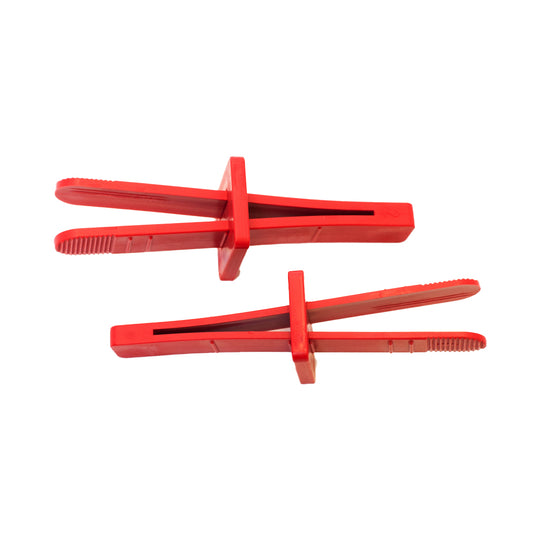
- Each package includes two unassembled Jaw Exercisers and a TalkTools instruction booklet (SKU 1551).
- Made from FDA-approved materials; reusable, durable, and designed for short, purposeful therapeutic sessions under clinician guidance.
- Available as part of the OPT Program Kit and the Jaw Program book-and-tool set for comprehensive jaw therapy programming.
The TalkTools® Jaw Exerciser is an Oral Placement Therapy tool that teaches jaw stability, symmetry, and grading through movement and gentle resistance. Unlike Jaw Grading Bite Blocks, which use static isometric holds, the Jaw Exerciser builds dynamic control through bite-and-release movement. It is used after foundational bite block work to develop smooth, functional jaw motion for safer chewing and clearer speech.
What Is the TalkTools® Jaw Exerciser?
Developing smooth, coordinated jaw movement is one of the more complex goals in oral motor therapy. Static jaw holds, such as those trained with Bite Blocks, build positional awareness and strength, but graded jaw movement, the ability to open and close the jaw fluidly and precisely, requires a different kind of practice. Specifically, the TalkTools® Jaw Exerciser was designed for that next step.
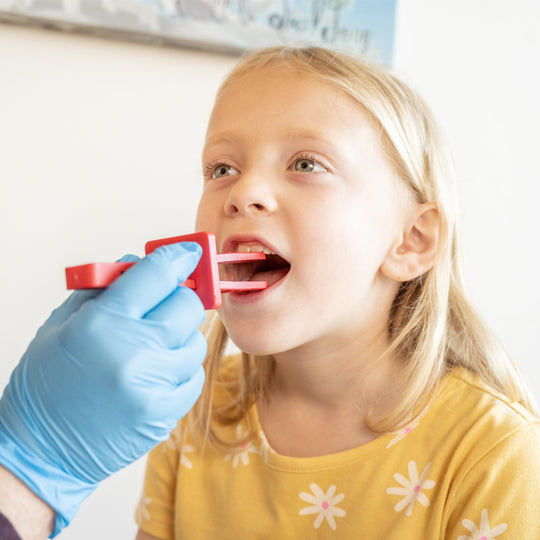
The Jaw Exerciser is a resistance-based OPT tool that develops dynamic jaw control through movement. Rather than holding a fixed jaw position, the learner performs controlled bite-and-release repetitions against the tool’s gentle resistance, training the muscular coordination needed for smooth, graded jaw movement.
Additionally, each package (SKU 1551) includes two unassembled Jaw Exercisers and a TalkTools instruction booklet. The booklet provides guidance on getting started, safety considerations, and how to integrate the tool within a broader OPT jaw program. As a result, professional evaluation is essential for determining appropriate timing and use.
How the Jaw Exerciser Works
The tool follows a movement-and-resistance hierarchy that allows clinicians to increase challenge gradually. Unlike the fixed jaw positions of Bite Blocks, the Jaw Exerciser engages the jaw through repetitive, controlled opening and closing against resistance, building the kind of smooth, coordinated movement that transfers directly to chewing and speech.
Consequently, sessions are kept short and quality-focused. The clinician monitors for symmetry, form, and early signs of fatigue, adjusting the number of repetitions and level of challenge as the learner progresses.
Jaw Exerciser versus Jaw Grading Bite Blocks
These two tools are commonly used within the same OPT jaw program but serve distinct purposes at different stages. Therefore, understanding the difference is essential for correct sequencing.
| Feature | Jaw Exerciser | Jaw Grading Bite Blocks |
|---|---|---|
| Movement type | Dynamic bite-and-release against resistance | Isometric holds at set jaw heights |
| Primary goal | Smooth graded jaw opening and closing | Jaw strength and positional stability |
| OPT sequence | Introduced after Bite Blocks and Jaw Closure Tubes | Typically earlier in the jaw hierarchy (positions 2 through 7) |
| Package contents | 2 unassembled Jaw Exercisers + instruction booklet | 2 sets of 6 bite blocks + instruction booklet |
Benefits and Clinical Applications
When used at the appropriate stage of a jaw program, the Jaw Exerciser provides targeted benefits across feeding and communication goals.
The Jaw Exerciser fills a critical gap between static bite block training and real-world jaw demands. Isometric work builds the foundation, but the dynamic, graded movement trained with the Jaw Exerciser is what actually transfers to function.
When introducing this tool, start conservatively. In fact, meaningful resistance is built in, and overworking the jaw musculature early in a session can lead to fatigue that undermines quality. Short, high-quality repetitions will always outperform longer, fatigued sessions.
Who Is the Jaw Exerciser For?
The Jaw Exerciser is intended for speech-language pathologists, occupational therapists, and trained caregivers. In particular, it is appropriate for learners who have completed foundational jaw stability work with Bite Blocks and are ready to develop dynamic graded movement. Common goals it supports include reduced jaw grading for chewing, inconsistent jaw position for speech sounds, and structured oral input as part of a sensory-motor program.
Use may take place in clinical, school, or home settings, always within a clinician-directed plan matched to the learner’s age and developmental level. This product does not constitute medical advice. All use should be guided by a qualified clinician.
Using the Jaw Exerciser: Quick Start
- Confirm readiness with the clinician. The learner should have completed foundational work with Jaw Grading Bite Blocks and Progressive Jaw Closure Tubes before this tool is introduced.
- Review the instruction booklet and the clinician’s specific directions before the first session.
- Begin with gentle bite-and-release repetitions at the learner’s current level. Prioritize smooth, symmetrical movement over speed or quantity.
- Keep sessions short and positive. Quality of movement matters far more than the number of repetitions completed.
- Increase resistance or repetitions gradually, only as directed by the clinician and only when form remains consistent.
- Integrate with other OPT tools as indicated, including Bite Tubes, Straw Kit, or Horn Kit.
- Adult supervision is required at all times.
Care, Cleaning, and Safety
- Hand-wash with mild soap and warm water; rinse thoroughly and air-dry completely before storing.
- Made from FDA-approved materials; reusable and durable.
- Use the TalkTools Cleaning Kit for thorough disinfection in clinical or multi-user settings.
- Inspect regularly for wear, tearing, or damage. Replace any damaged components immediately.
Frequently Asked Questions
How is the Jaw Exerciser different from Jaw Grading Bite Blocks?
When should the Jaw Exerciser be introduced in a program?
What does the package include?
Is it available in a bundle?
How frequently should sessions be practiced?
- TalkTools®. Jaw Exerciser product page. blog.talktools.com
- Rosenfeld-Johnson, S. Oral Placement Therapy for Speech Clarity and Feeding. TalkTools®.
- TalkTools®. OPT Program Kit. talktools.com
« Back to Glossary Index